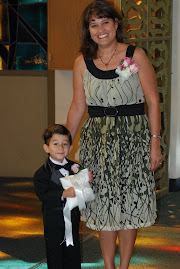
We received these picture texts from the boys yesterday when we were at the hospital.
Jack's picture

Benjamin's picture

Those boys sure know how to make us smile!

There are characters who have autism, down syndrome, intellectual disabilities, visual impairments, hearing impairments, speech delays, dyslexia, spina bifida, synesthesia and who use a wheelchair. The list was created using the winners of the Dolly Gray Award and the Schneider Family Book Award and lists compiled by Sandy Lahmann, Cherl Pesto at Disaboom and Mary Anne Prater & Tina Taylor Dyches from Teaching Exceptional Children.
* Very Special Critter, Mercer Mayer–Little Critter discovers that the new boy in class is really not so different from anyone else, even though he is in a wheelchair.
* My Friend Isabelle, Eliza Woloson–A young boy the activities he shares with his friend Isabelle, a girl with Down Syndrome.
* Susan Laughs, Jeanne Willis /Tony Ross–Rhyming couplets describe a wide range of common emotions and activities experienced by a girl who uses a wheelchair.
* Harry and Willy and Carrothead, Judith Casely–Three boys overcome prejudicial ideas about appearances and become friends.
* Hooway for Wodney Wat, Helen Lester /Lynn Munsinger–Classmates make fun of Rodney because he can’t pronounce his name, but it is Rodney’s speech impediment that drives away the class bully.
* Dad and Me in the Morning, Patricia Lakin–A deaf boy and his father share a special time as they watch the sun rise at the beach.
* Best Friend on Wheels, Debra Shirley–The narrator meets Sarah, a girl in a wheelchair, and they become fast friends.
* Kami and the Yaks, Andrea Stenn Stryer–Kami, a young Sherpa boy who is deaf, rescues his family?s yaks and livelihood during a violent storm.
* The Deaf Musicians, Pete Seeger /Paul Dubois Jacobs–After losing his hearing, jazzman Lee learns to make music in a new way.
* Looking out for Sarah, Glenna Lang–Describes a day in the life of a seeing eye dog, from going with his owner to the grocery store and post office, to visiting a class of school children, and playing ball
* Piano Starts Here: The Young Art Tatum, Robert A. Parker–Tatum came from modest beginnings and was nearly blind, his passion for the piano and his acute memory for any sound drove him to become a virtuoso who was revered by both classical and jazz pianists.
* Alphabet War, Diane Burton Robb–Learning to read is a great struggle for Adam, but with expert help, hard work, and belief in himself, he wins “The Alphabet War.
* See the Ocean, Estelle Condra–Driving through mountain fog to the beach, two young brothers compete to see who will first see the ocean, but it is their blind sister Nellie who senses it first.
* Knots on a Counting Rope by Bill Martin Jr./John Archambault–A grandfather and his blind grandson reminisce about the young boy’s birth, his first horse, and an exciting horse race.
* Thank You, Mr. Falker, Patricia Polacco–Trisha could paint and draw beautifully, but when she looked at words on a page, all she could see was jumble. It took a very special teacher to recognize little Trisha’s dyslexia.
* Mama Zooms, Jane Cowen-Fletcher–A boy’s wonderful mama takes him zooming everywhere with her, because her wheelchair is a zooming machine.
* My Pal, Victor / Mi amigo V?or by Diane Gonzales Bertrand –Two boys enjoy the summer doing all of the things that boys do despite one boy’sdisability.
* Two Tracks in the Snow, Louella Bryant–Ari, a boy who uses a wheelchair, uses his monoski to teach Will how to snowboard.
* Silent Lotus, Jeanne M. Lee–Although she cannot speak or hear, Lotus trains as a Khmer court dancer and becomes eloquent in dancing out the legends of the gods.
* Crow Boy, Taro Yashima–A lonely boy in a village school in Japan learned all the calls of the crows as he left his home at dawn and arrived home at sunset on school day.
* Ian’s Walk, Laurie Lear–A young girl realizes how much she cares for her autistic brother Ian when he gets lost at the park.
* Featherless (Desplumado), Juan Felipe Herrera–Although Tomasito’s spina bifida keeps him in a wheelchair, where he often feels as confined as his flightless and featherless pet bird, he discovers that he can feel free when he is on the soccer field.
* Keeping Up with Roo, Dan Andresen/Sharlee Glenn –Gracie has always had a special bond with her Aunt Roo, who is mentally disabled, but that relationship starts to change when Gracie beginsschool.
* Dad, Jackie, and Me, Myron Uhlberg-A young boy shares the excitement of Jackie Robinson’s rookie season with his deaf father.
Click HERE for the link to the original article
My parents were expecting to become the parents of a healthy baby girl. That turned out to not be the case.
I was born with a form of Spina Bifida called myelomeningocele. The covering of my spinal cord and the spinal nerves from L4-L5 were in a sack outside of my back, creating permanent nerve damage from the area of L4 down.
My family raised me with a “can do” attitude, and I was never treated any differently than the other kids in my family. This attitude shaped who I am now.
Becoming a nurse was the ultimate goal for me; and from day one, I was not going to let anyone or anything stand in my way. It’s what I was born to do.
I e-mailed several nursing schools. All of the responses were negative. Some schools even offered me free counseling to change my major.
The only school I applied to was Wright State University. I decided to disclose my Spina Bifida in the essay that I was required to submit.
I was elated when I got the letter of admittance.
The assistant dean vowed to help me. We would take it quarter by quarter, meeting prior to the start of each clinical. If it was not an essential function for nursing, then we discussed delegating the task. If I knew there was a lift or transfer that I could not perform, I asked a classmate to do it for me, promising to lend my help when he or she needed it.
I wanted to stay close to my friends and family after graduation, so I decided to look for jobs around Dayton. It was there that I got my first taste of what was to come.
I interviewed at numerous hospitals and even worked with recruiters, but I got turned down for every job. I disclosed my Spina Bifida before some interviews; for others, I did not say anything until I went into the interview room.
The excuses ranged from, “We want someone with more experience” to “You can’t possibly do nursing with a wheelchair.”
I had filled out an application for the Rehabilitation Institute of Chicago. The gentleman from human resources called me. I told him that I was interested in spinal cord injuries because of my history with Spina Bifida. He immediately asked me to come and interview.
I spent all day at RIC interviewing. I wasn’t even out of the airport parking garage when I got a phone call requesting a second interview.
I now work at RIC as a registered nurse. I use my wheelchair for long distances, but I do walk in my patients’ rooms.
My patients have been very accepting. A lot of my younger patients think it is cool that their nurse has a wheelchair just like them.
I graduated in November 2004— the proudest day of my life. As I walked across the stage, I had tears in my eyes. The biggest lesson that I have learned from this entire experience is to never let go of a dream.
Workable Wisdom
Excerpt from a chapter by Marianne Haugh, RN, BSN, in “Leave No Nurse Behind: Nurses working with disAbilities” by Donna Maheady, EdD, ARNP available at
www.LeaveNoNurseBehind.com. http://leavenonursebehind.com/ Proceeds from sales of the book help to maintain www.ExceptionalNurse.com.
Photo Courtesy www.ExceptionalNurse.com
About the Author: Donna Maheady, Ed.D., ARNP is a pediatric nurse practitioner and nursing care consultant. She is a strong advocate for inclusion of nurses with disabilities in nursing practice, and has taught nursing for over 20 years and worked with nursing students with a wide range of disabilities. Donna is the founder of www.ExceptionalNurse.com, a nonprofit resource network for nurses and nursing students with disabilities.
Click here to read more on Donna Maheady.
 What a wide range of emotions we have been through these last few days. Annabelle had her surgery Wednesday morning and thankfully it well. It was a long morning leading up to the surgery but well worth it if this shunt can be the thing to make our little girl's head feel and work better.


http://www.cdc.gov/features/spinabifida/
http://www.spinabifidaassociation.org/site/c.liKWL7PLLrF/b.2642323/k.8E10/Spina_Bifida.htm I can't even believe that this is happening. My heart is breaking at the thought of our precious little girl going back to the hospital for a shunt revision. We saw the neurosurgeon on Tuesday and he confirmed what Branden and I felt on Monday night on the top of her head. I called it fluffy, Dr. Javahery called it bulging fontanels. Any way you call it, it is not good. The bulging / fluffiness is a possible indication that the CSF
 Today was Belle's first "out of the hospital" doctor's appointment. She met with Dr. McCormick, her pediatrician. It was really nice to just go to a typical check up and hear positive information. She thought that Belle looked really good and was pleased at how her back wound was healing. She was also SUPER pleased that Belle gained 1 pound and grew 2 inches!!






.jpg)